
Maruti Suzuki India Ltd (MSIL), the largest passenger vehicle manufacturer in India, has set a road map to expand its global presence by targeting exports of 800,000 units by the end of this decade -- almost double the approximately 280,000 units sent abroad in 2023-24, Rahul Bharti, executive director, corporate affairs, told Business Standard. The company's upcoming electric vehicle (EV) strategy is expected to play a crucial role in its global ambitions.
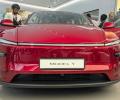
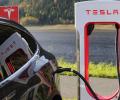
Analysts believe Tesla will first focus on building the Model Y brand before expanding -- both in terms of volume and models.

Sluggish urban demand, a high base effect, and weak sales of hatchbacks and sedans weigh down passenger vehicle sales in FY25.
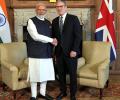
For UK automakers, market access to India will be limited by quantity caps and phased tariff cuts, especially on petrol, diesel and electric vehicles.

China's export curbs on critical minerals crucial for India's electronics sectors are no longer mere warnings but a wake-up call for New Delhi, underscoring the need for urgent measures like reverse-engineering of low- to mid-tech imports to cut overreliance on Beijing, think tank GTRI said on Thursday.

Japanese automaker Suzuki Motor Corporation will invest Rs 70,000 crore in the next five to six years in India to strengthen its operations in the country, its representative director and president Toshihiro Suzuki said on Tuesday. Prime Minister Narendra Modi on Tuesday kicked off exports of Maruti Suzuki India's first electric vehicle e VITARA to 100 countries and also inaugurated the production of lithium-ion battery cells for strong hybrid electric vehicles at its facility in Gujarat.

The automobile industry has sought government support in expediting approvals from the Chinese government for importing rare earth magnets used in various applications, including passenger cars. As per the industry sources, various domestic suppliers have already sought approval from the Chinese government through their local vendors in China.
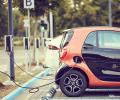
Lithium-ion cells, primarily imported from China, are likely to become cheaper following punitive tariffs imposed by the US on Chinese battery cells.
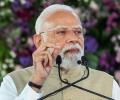
A day before US President Donald Trump's additional 25 per cent tariff kicks in, Prime Minister Narendra Modi on Tuesday made a vehement pitch for swadeshi and Make in India that should help create jobs in the country.
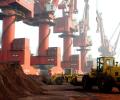
Inventories of rare earth magnets used in critical automotive components - particularly electric vehicle (EV) traction motors and power steering systems - could run dry by mid-July this year, according to rating agency Icra.
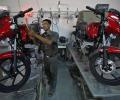
On the exports front, Bajaj is under pressure in Bangladesh and Africa. On the domestic front, it could ride improvement in rural demand and new launches but it also has to cope with competitive intensity and a high base. The management projects 7-8 per cent volume growth in domestic 2W in financial year 2025 (FY25) with moderation in H2FY25 due to a high base Y-o-Y.
Lower rates effectively increase disposable income, strengthen purchasing capacity, and support broader consumption growth.
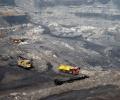
The government plans to establish a fully indigenous manufacturing ecosystem with an annual production capacity of up to 6,000 tonnes. The scheme is expected to run for seven years, according to official documents.
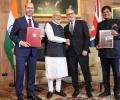
India and the UK on Thursday inked a landmark free trade agreement (FTA) that will cut tariffs on British whisky, cars and an array of items, besides boosting bilateral trade by around $34 billion annually.

'...the auto industry to get back to 7% to 8% annual growth.' 'High growth in the SUV segment alone will not achieve this, as it is a small market.'
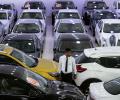
Auto majors Maruti Suzuki, Tata Motors and Mahindra & Mahindra reported robust sales in September as reduced price tags owing to GST rationalisation led to record demand in the Navaratri period. The month also saw Tata Motors and Mahindra & Mahindra settling at number two and three positions, respectively in vehicle wholesales ahead of Hyundai Motor India.

Mahindra & Mahindra plans to manage rare earth magnet supplies through alternative sourcing channels for the next nine months and will pursue 'engineering efforts' to address the raw material shortage situation amid growing product portfolio, according to a senior company executive. The imposition of export restrictions by China on key rare earth magnets has resulted in supply chain bottlenecks, impacting the user industries, including the auto and electronics sectors.
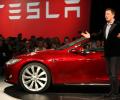
If Tesla comes in, India's position as a manufacturing hub will rise many notches, as it will become only the second country, after China, to have both Apple as well as Tesla.

Tata Motors is actively considering tapping into some of the export markets beyond South Asia, for its range of electric vehicles (EVs) as it sees an opportunity of selling affordable EVs in markets outside India. The export plans will coincide with the commercial launch of the Curvve - an electric SUV concept that broke cover on Wednesday, in two years from now, Shailesh Chandra, MD, Tata Motors PVs and Electric Mobility, told Business Standard. "We are actively thinking of the international markets and we would like to go with a portfolio of products. "We have identified a few markets and in a couple of years, we should commence the same," said Chandra.

For FY26, the company has adopted a cautious outlook, anticipating domestic growth to broadly track the industry's low single-digit estimated growth amid ongoing economic headwinds.

The GST Council on Wednesday approved a two-tier rate structure of 5 and 18 per cent, which will be implemented from September 22.

Maruti Suzuki India (MSIL) said on Thursday its operations are unaffected by the global rare earth magnet shortage, but added that the situation is "uncertain and evolving". The firm said it is exploring multiple solutions to maintain continuity in operations and will notify stakeholders in case of material impact.
The 17 rare earth elements that are at the centre of the current crisis are critical components of everyday products -- from cars to jet engines to electronics like smartphones and flat-screen TVs.
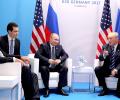
The trade relationship between India and the United States has been strained by the imposition of 25% tariff by the US on Indian goods.

The country's largest carmaker Maruti Suzuki India is recalibrating production of its upcoming model e-Vitara due to the shortage of rare earth magnets, industry sources said. The auto major is looking to produce around 8,000 units of the model by September as against the earlier stated plan of rolling out over 26,000 units during the period.
Since April 4, around 35 importers in India have either not received any shipment of the magnets or have not been granted the import licences by China.

Any industrial policy is only as good as how it is applied and the other reforms that support it. This was as true 40 years ago as it is now, points out Debashis Basu.
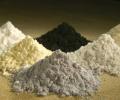
Dysprosium and terbium, two heavy rare earth elements with unique properties, are not available in extractable quantities in India.

'The favourable rupee-dollar exchange rate, there are opportunities we can tap.'

Tata Motors on Friday reported a 62.2 per cent decline in consolidated net profit to Rs 4,003 crore in the June quarter, impacted by volume decline across segments, drop in JLR profits due to US tariffs and high base effect due to gain from sale of discontinued operations. The auto major had posted a consolidated net profit of Rs 10,587 crore in the April-June quarter of the previous fiscal, Tata Motors Ltd (TML) said in a regulatory filing.
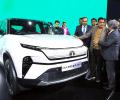
'I'm very much against petrol and diesel....'' 'I travel in an electric car.' 'I have had a really good experience with it.'
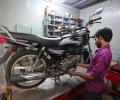
Hero MotoCorp on Tuesday posted 24 per cent increase in consolidated profit after tax at Rs 1,169 crore for the fourth quarter ended March 31, 2025 riding on higher margins backed by better product mix, parts revenue and cost effectiveness. The company had reported a consolidated profit after tax (PAT) of Rs 943 crore in January-March FY24.
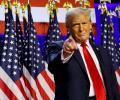
Firodia talked about his plans for the EV-components business, and the components business at large for the group
In 2024 alone, South India saw the highest rise in sales in the luxury segment, with Tamil Nadu reportedly registering a 19.3 per cent increase in premium car registrations from 2022-23

The new scheme, promoting manufacturing of electric vehicles (EVs) by global majors, will give a fillip to companies like Tesla and its upstart rival Vinfast, both of whom have lobbied for lower import duties from the Centre. While Vinfast has already announced an investment of Rs 4,000 crore to set up an electric vehicle (EV) plant in Tamil Nadu, Tesla's next move will be watched carefully. Four years ago, Musk announced that his company would come to India.
Automotive (auto) major Tata Motors posted a 51 per cent drop in consolidated net profit for the January-March quarter (Q4) of 2024-25 (FY25), to Rs 8,470 crore, due to a deferred tax asset of almost Rs 9,000 crore in the corresponding quarter of the previous financial year and an exceptional item of Rs 566 crore during the quarter. Revenue was up just 0.5 per cent year-on-year (Y-o-Y) at Rs 1.18 trillion for Q4FY25.

India's three-wheeler exports, which have been on a downhill trajectory over the past few years, are showing no signs of recovery in FY25, with key markets like Sri Lanka, Bangladesh, Nigeria, and Egypt witnessing subdued demand. In May, the country's exports plummeted 11.3 per cent year-on-year (Y-o-Y).

However, the company has not provided a timeline for the launch of the small electric car.

Speaking at the unveiling of the model at the Auto Expo, held as part of the Bharat Mobility Show, Suzuki Motor Corporation representative director and president Toshihiro Suzuki said the electric SUV would be exported to various regions, including Europe and Japan. Suzuki Motor Corporation, which has around 58 per cent stake in Maruti Suzuki India, plans to make India a global production hub for the model.
'That way you're not hostage just to US sort of exports to India.'
 © 2026 Rediff.com - Advertise with us - Disclaimer - Privacy Policy - Sitemap - Feedback - About us - Terms of use - Grievances